

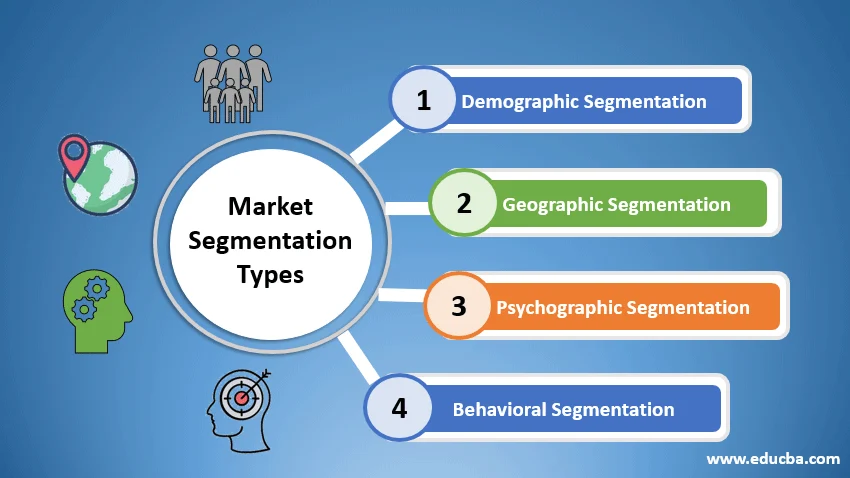
Let’s break down the four core types of market segmentation, modern examples, and how AI and UX now amplify each one.
What Is Market Segmentation (Really)?
Market segmentation is the process of dividing your audience into smaller groups based on shared characteristics so you can:
- Deliver relevant messaging
- Improve ad targeting
- Increase conversions
- Reduce wasted marketing spend
Segmentation isn’t about excluding people.
It’s about clarity.
And clarity converts.
1️⃣ Demographic Segmentation
This is the classic starting point.
You group your audience based on:
- Age
- Gender
- Income
- Education
- Occupation
- Family status
Modern Example
A SaaS accounting platform may target:
- Freelancers aged 25–40
- Small business owners earning $50K–$250K annually
Ad copy, pricing plans, and landing page messaging will differ depending on whether the target audience is a solo entrepreneur or a growing agency.
What’s Changed in 2026?
Basic demographic targeting alone isn’t enough anymore.
Platforms like Meta (parent company of Facebook and Instagram) and Google Ads now use AI-driven audience modeling.
They combine demographics with behavioral signals automatically.
That means your creative and landing page experience must align with the persona—or your cost per conversion rises fast.
2️⃣ Geographic Segmentation
This focuses on location:
- Country
- Region
- City
- Climate
- Urban vs rural
Modern Example
A web design agency might:
- Promote multilingual SEO services in Europe
- Emphasize local SEO in U.S. cities
- Highlight mobile optimization in emerging mobile-first markets
Why It Matters More Now
Privacy laws (like GDPR and evolving U.S. state regulations) require region-specific compliance.
Additionally:
- Search behavior varies by region
- Cultural messaging shifts
- Payment preferences differ
International targeting now requires technical precision (hreflang, local hosting, regional schema markup).
Ignoring geographic segmentation leads to mismatched messaging—and confused users.
3️⃣ Psychographic Segmentation
Now we get deeper.
Psychographic segmentation groups audiences by:
- Values
- Lifestyle
- Interests
- Personality traits
- Motivations
This is where branding and storytelling shine.
Modern Example
Two business owners may both be 35-year-old entrepreneurs.
But one:
- Values sustainability
- Prefers minimalist design
- Invests in long-term brand growth
The other:
- Prioritizes fast scaling
- Loves bold visuals
- Wants aggressive paid traffic strategies
Same demographic.
Very different psychographic profiles.
In 2026, AI tools analyze behavioral patterns to detect these preferences based on engagement data, content interaction, and purchasing signals.
This is how personalization engines dynamically change headlines, testimonials, and CTAs in real time.
And yes—this is where conversion rates jump dramatically.
4️⃣ Behavioral Segmentation
This is arguably the most powerful segmentation type today.
It’s based on how users interact with your brand:
- Website visits
- Purchase history
- Content downloads
- Email engagement
- Ad clicks
- Time on page
Modern Example
A visitor who:
- Downloads your SEO checklist
- Spends 8 minutes on your pricing page
- Returns twice in one week
…is in a completely different buying stage than someone who just landed on your homepage from social media.
Behavioral segmentation allows you to:
Trigger retargeting ads
Send automated email sequences
Adjust website messaging
Offer limited-time incentives
Use AI chatbots for contextual support
Platforms like HubSpot and Salesforce now integrate behavioral data with AI-driven automation to personalize entire funnels.
When done right, this feels helpful—not invasive.
The AI Shift: Segmentation Is Smarter Now
Here’s what’s changed dramatically:
AI no longer just tracks segments.
It predicts them.
Modern marketing tools can:
- Identify micro-segments
- Predict churn risk
- Score leads automatically
- Recommend optimal messaging
- Forecast lifetime value
But here’s the catch:
AI amplifies strategy. It doesn’t replace it.
Without a clear brand identity and user journey, automation creates noise—not growth.
At ONEWEBX, we combine segmentation with UX strategy to create conversion ecosystems—not fragmented campaigns.
Why Segmentation Directly Impacts UX & Design
Segmentation isn’t just a marketing tactic.
It influences:
- Website layout
- Content hierarchy
- CTA placement
- Pricing structure
- Navigation architecture
- Personalization modules
For example:
A corporate B2B audience expects:
- Structured navigation
- Case studies
- ROI-focused messaging
A creative startup audience may respond better to:
- Visual storytelling
- Bold micro-animations
- Founder-driven messaging
Design must align with segment psychology.