

Modern inboxes are crowded, privacy-focused, and algorithm-driven. The only way to consistently improve open rates, clicks, and conversions is to test intelligently, not randomly. That’s where A/B testing becomes less of a tactic—and more of a mindset.
Let’s break down how to use A/B testing in email marketing the right way in today’s AI-powered world.
What A/B Testing Actually Means in 2026
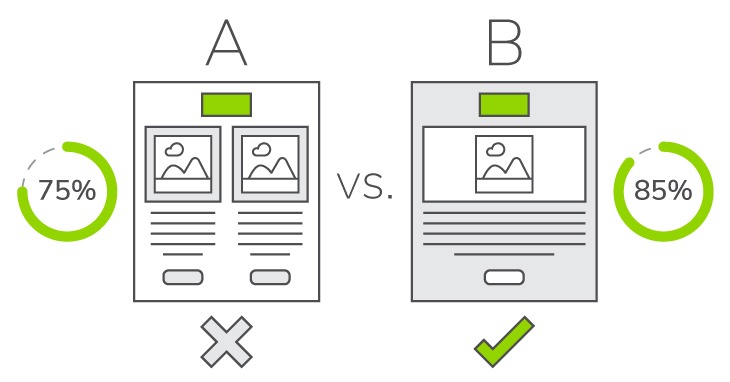
A/B testing (also called split testing) is the process of sending two variations of an email to a segmented audience to see which performs better based on a specific goal.
But modern A/B testing isn’t just:
- “Subject line A vs. subject line B”
- “Button color blue vs. green”
Today, it’s about behavioral insight, personalization, and learning what your audience responds to—at scale.
Why A/B Testing Matters More Than Ever
Between GDPR, CCPA, Apple Mail Privacy Protection, and disappearing third-party cookies, marketers now have less data—but higher expectations.
A/B testing helps you:
- Make decisions based on first-party data
- Improve performance without increasing send volume
- Adapt content for different audience segments
- Train AI tools with cleaner, higher-quality signals
In short: it helps you work smarter, not louder.
What You Should Be A/B Testing Right Now
1. Subject Lines (Still King—But Smarter)
Yes, subject lines still matter—but novelty alone won’t cut it.
Test:
- Curiosity vs. clarity
- Short vs. conversational
- Personalization tokens vs. plain text
- Value-driven vs. story-driven framing
Pro tip: AI tools inside platforms like HubSpot, Mailchimp, and ActiveCampaign can suggest variations—but you choose the hypothesis.
2. Preview Text (The Silent Influencer)
Preheaders are often ignored, yet they strongly influence opens.
Test:
- Continuation of the subject line vs. contrast
- Question vs. statement
- Benefit-led vs. teaser copy
Small changes here can produce outsized results.
3. Email Layout & UX
Design impacts trust—and trust impacts clicks.
Test:
- Plain-text vs. designed layouts
- One CTA vs. multiple CTAs
- Button placement and hierarchy
- Mobile-first vs. desktop-styled designs
Accessibility matters too: readable fonts, proper contrast, and clear structure aren’t optional anymore.
4. Calls to Action That Actually Feel Human
“Click here” isn’t doing you any favors.
Test:
- Action-based language vs. benefit-based
- First-person vs. second-person
- Soft CTAs vs. direct CTAs
The goal isn’t pressure—it’s alignment.
5. Send Time & Frequency (Context Is Everything)
There is no universal “best time to send.”
Use A/B testing and AI-powered optimization to test:
- Day of week
- Time of day
- Cadence for different segments
Modern platforms now adjust send times automatically—but only if you give them quality data.
How AI Supercharges A/B Testing (When Used Correctly)
AI doesn’t replace strategy—it accelerates it.
Used well, AI can:
- Generate hypothesis-driven variations
- Identify patterns across large datasets
- Predict likely winners before full rollout
- Personalize content at the segment level
Used poorly, it creates noise.
At ONEWEBX, we help businesses blend AI automation with human insight, ensuring testing leads to learning—not just activity.
A/B Testing Best Practices Most Marketers Still Ignore
- Test one variable at a time
- Define success before you send
- Use statistically significant sample sizes
- Run tests long enough to avoid false winners
- Document results and apply them across campaigns
A/B testing isn’t about winning emails—it’s about building a conversion intelligence system.
The ONEWEBX Approach to Email Optimization
We don’t test for the sake of testing.
We align A/B testing with:
- Brand voice and UX principles
- Website conversion goals
- CRM and automation workflows
- Long-term customer journey mapping
Email doesn’t live in a vacuum—it’s part of a larger digital ecosystem. And when that ecosystem is designed intentionally, results compound.