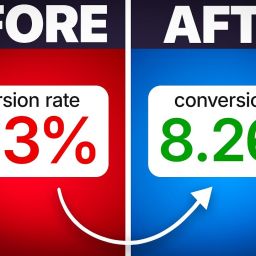


Let’s break it down.
What Is a “Good” Conversion Rate in 2026?
A conversion rate is the percentage of visitors who complete a desired action:
- Purchase
- Form submission
- Phone call
- Newsletter signup
- Demo booking
But here’s the nuance:
- High-ticket B2B services may convert at 1–3%
- E-commerce brands often aim for 2–4%
- Highly optimized funnels can exceed 8–10%
Context is everything.
Average Conversion Rates by Industry
While benchmarks vary depending on region and traffic source, here’s a modern snapshot of common industry averages:
| Industry | Avg. Conversion Rate |
|---|---|
| E-commerce | 2–4% |
| B2B Services | 1–3% |
| Legal Services | 3–7% |
| Healthcare | 3–6% |
| Finance & Insurance | 2–5% |
| Education | 4–8% |
| SaaS | 3–7% |
These are directional averages—not guarantees.
Your UX, offer clarity, traffic quality, and trust signals will dramatically influence your actual performance.
Conversion Rates by Advertising Platform
Different platforms attract users at different stages of intent.
That matters.
Google Ads
- Search campaigns: 3–7%
- Display campaigns: 0.5–1.5%
Why the difference?
Search users already have intent. Display interrupts.
High-intent keywords convert better—especially when landing pages are aligned with the search query.
Facebook / Instagram Ads
- Average conversion rate: 1–3%
Social media is interruption-based marketing. Creative, personalization, and retargeting are critical.
In 2026, AI-driven audience modeling has improved targeting—but privacy updates (including cookie restrictions) mean first-party data is now king.
LinkedIn Ads
- B2B conversion rates: 2–5%
Higher cost per click, but stronger professional intent.
For corporate service providers, this can outperform broader social platforms when the funnel is optimized.
Why Conversion Rates Vary So Much Today
Here’s what’s changed in the last few years:
1️⃣ AI-Driven Advertising
Ad platforms now use machine learning to optimize placements, creative, and bidding automatically.
Smart campaigns can self-adjust.
But automation without strategic messaging? Still ineffective.
2️⃣ Privacy Regulations
With GDPR, evolving U.S. privacy laws, and third-party cookie limitations, tracking is less precise.
That means:
- Attribution is more complex
- First-party data strategies are essential
- Email and CRM integration matter more than ever
3️⃣ UX Expectations Are Higher
Users expect:
- Fast load times
- Mobile-first design
- Clear value propositions
- Accessibility compliance
- Social proof
- Transparent pricing
If your website feels outdated—even slightly—conversion rates drop instantly.
The Real Secret: It’s Not Traffic. It’s Alignment.
At ONEWEBX, we see this constantly:
Businesses obsess over getting more traffic when the real problem is poor funnel design.
Here’s what actually moves conversion rates:
Clear messaging above the fold
Strategic CTA placement
Frictionless forms
Smart automation follow-ups
Trust badges and testimonials
Heatmap analysis
A/B testing
AI-assisted personalization
When UX, messaging, and targeting align, conversion rates climb.
When they don’t, no ad budget can save you.
Tools to Benchmark & Optimize Conversion Rates
Modern businesses don’t guess. They measure.
We rely on tools like:
- Google Analytics
- Hotjar
- HubSpot
- SEMrush
- Ahrefs
These platforms help identify:
- Drop-off points
- User behavior patterns
- Underperforming landing pages
- High-converting traffic sources
AI-enhanced reporting now makes it easier to detect patterns humans might miss.
But tools alone don’t optimize funnels—strategy does.
How to Improve Your Conversion Rate (Practically)
Here’s where most businesses can improve immediately:
1️⃣ Refine Your Value Proposition
If visitors can’t explain what you offer in 5 seconds, you’re losing them.
2️⃣ Simplify Forms
Fewer fields = higher conversions.
3️⃣ Optimize for Mobile First
Mobile traffic dominates most industries.
4️⃣ Use AI for Personalization
Dynamic headlines. Smart content blocks. Behavioral triggers.
5️⃣ Strengthen Trust Signals
Reviews, case studies, client logos, certifications.
6️⃣ Improve Page Speed
Even a 1-second delay can significantly reduce conversions.