
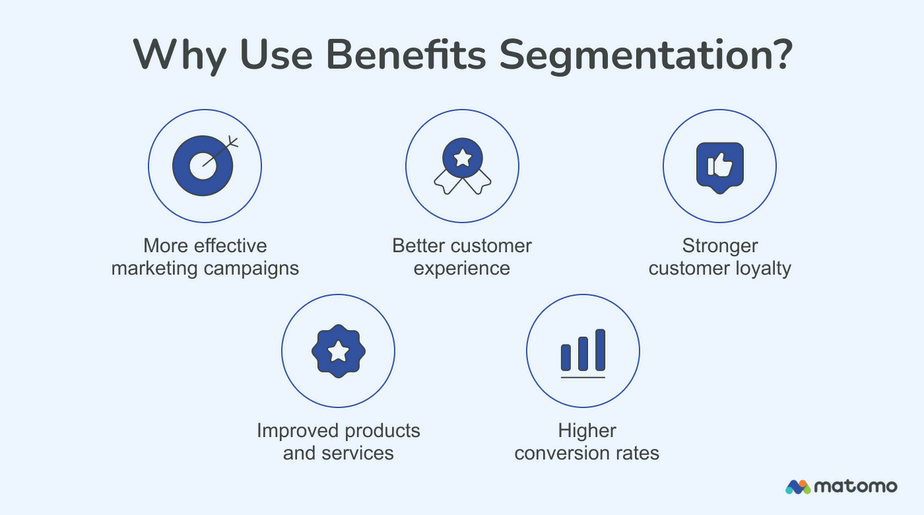
In today’s AI-powered, hyper-competitive digital landscape, benefit segmentation helps brands move beyond surface-level targeting and into messaging that actually resonates—and converts.
What Is Benefit Segmentation (In Human Terms)?
Benefit segmentation is the practice of grouping your audience based on the specific outcomes or value they’re seeking from your product or service.
Not demographics.
Not job titles.
Not vague personas.
Benefits.
Examples:
- Saving time
- Reducing risk
- Increasing revenue
- Improving usability
- Gaining peace of mind
- Looking more professional
Different users want different results—even when buying the same thing.
Why Benefit Segmentation Matters More Than Ever
Modern marketing is shaped by three big shifts:
- AI-driven personalization
- Privacy-first data collection
- Higher expectations for relevance
You have less third-party data—but more tools to understand behavior. Benefit segmentation bridges that gap.
It allows you to:
- Create clearer, more persuasive messaging
- Improve email and landing page conversion rates
- Personalize experiences without creepy tracking
- Align UX, content, and offers with real intent
This is how you stay relevant without crossing privacy lines.
How Benefit Segmentation Shows Up in Digital Marketing
1. Website Messaging That Speaks to Motivation
Your homepage shouldn’t try to say everything to everyone.
With benefit segmentation, you can:
- Tailor hero messaging by intent
- Create dedicated landing pages for different outcomes
- Adjust CTAs based on user goals
Good UX is about clarity—and benefit-led design creates it.
2. Smarter Email Campaigns
Email becomes exponentially more effective when segmented by benefit.
Instead of one generic campaign, imagine:
- One email focused on efficiency
- Another on ROI
- Another on simplicity or ease of use
A/B testing combined with benefit segmentation delivers insights you can actually act on.
3. Content That Attracts the Right Audience
Benefit-led content:
- Answers specific pain points
- Positions your brand as a solution—not a vendor
- Builds topical authority for SEO
AI tools like Semrush, Ahrefs, and Google Search Console help identify which benefits your audience is actively searching for.
How AI Makes Benefit Segmentation Scalable
AI doesn’t replace strategy—it amplifies it.
Used correctly, AI can:
- Analyze behavioral patterns across channels
- Surface common intent signals
- Predict which benefits drive conversion
- Personalize messaging at scale
At ONEWEBX, we combine AI insights with human strategy to ensure segmentation feels helpful—not robotic.
Common Mistakes to Avoid
- Segmenting too broadly (“everyone wants everything”)
- Relying only on demographics
- Ignoring UX and accessibility
- Creating segments without mapping them to real content or offers
Segmentation without execution is just theory.
How ONEWEBX Applies Benefit Segmentation for Clients
We don’t treat segmentation as a spreadsheet exercise.
We apply it across:
- Website structure and UX design
- Content strategy and SEO
- Email and automation workflows
- Conversion-focused landing pages
- AI-driven personalization systems
The result? Messaging that feels relevant, experiences that feel intuitive, and campaigns that perform better across the board.