

Despite being developed decades ago, Porter’s Five Forces remains one of the most effective ways to understand competitive pressure—especially when you modernize it for today’s digital, AI-powered, platform-driven economy.
If you’re making strategic decisions without a clear industry analysis, you’re essentially driving at night without headlights. Let’s turn them on.
What Is Porter’s Five Forces (and Why It Still Matters)
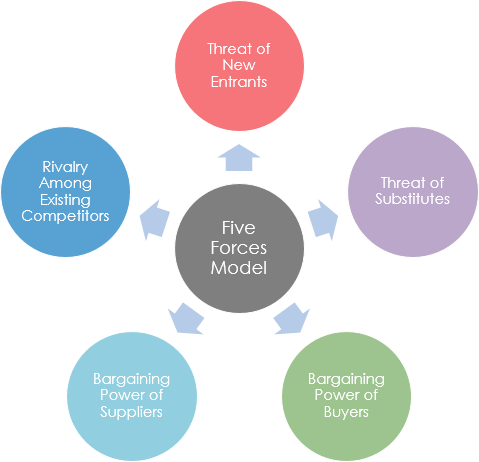
Porter’s Five Forces is a framework used to analyze the competitive dynamics of an industry, helping businesses understand where power lies—and where opportunities exist.
The five forces are:
- Competitive Rivalry
- Threat of New Entrants
- Bargaining Power of Buyers
- Bargaining Power of Suppliers
- Threat of Substitutes
In today’s landscape, these forces are shaped by AI tools, digital platforms, customer experience expectations, data access, and automation—not just price and production.
The 5 Forces—Updated for the Modern Digital Economy
1. Competitive Rivalry (Now Supercharged by Digital)
Competition today isn’t just the business down the street—it’s global, algorithmic, and always-on.
Modern factors to consider:
- SEO competition using tools like SEMRush, Ahrefs, and SimilarWeb
- UX/UI quality and accessibility
- Brand trust, social proof, and content authority
- AI-driven personalization and automation
Example:
Two companies may offer the same service, but the one with better UX, faster load times, smarter AI chat support, and stronger content strategy will dominate attention—and conversions.
2. Threat of New Entrants (Lower Barriers, Higher Stakes)
Digital tools have lowered entry barriers—but raised expectations.
Modern realities:
- No-code platforms and AI tools make launching easier
- Brand authority and trust are harder to build
- Data, automation, and customer experience are the new moats
Ask yourself:
How defensible is your brand experience—not just your product?
At ONEWEBX, this is where strategy + design + automation intersect to create long-term advantage.
3. Bargaining Power of Buyers (At an All-Time High)
Your customers are informed, comparison-driven, and impatient.
Why buyer power has increased:
- Instant access to reviews, comparisons, and alternatives
- SEO transparency and price visibility
- High expectations for personalization, accessibility, and UX
Modern response:
Businesses must compete on experience, clarity, and value, not just price.
AI-driven personalization, smart onboarding flows, and frictionless UX are now table stakes.
4. Bargaining Power of Suppliers (Shifting, Not Disappearing)
Suppliers today include:
- SaaS platforms
- Cloud providers
- Data sources
- AI tools and APIs
Vendor lock-in is real—and dangerous.
Smart strategy:
Diversify tools, understand dependencies, and build flexibility into your digital ecosystem.
This is where strategic tech stack planning becomes a competitive advantage.
5. Threat of Substitutes (The Silent Killer)
Substitutes don’t always look like competitors.
They might be:
- A new AI-powered workflow
- A DIY platform replacing an agency
- A content creator replacing a traditional service
Key insight:
Substitutes usually win by being simpler, faster, or more convenient.
The antidote? Strong positioning, clear differentiation, and an experience that’s hard to replace.
A Simple Example: Digital Marketing Agencies
Let’s apply Porter’s Five Forces to a modern digital marketing agency:
- Rivalry: High (crowded market, SEO competition, freelancers + agencies)
- New Entrants: High (low startup cost, AI tools)
- Buyer Power: High (clients compare aggressively)
- Supplier Power: Medium (tools like Google, Meta, SaaS platforms)
- Substitutes: High (DIY platforms, AI tools, internal teams)
Winning strategy:
Differentiate through strategy, UX expertise, automation, and measurable outcomes—not generic services.
Exactly where ONEWEBX thrives.
Why This Framework Still Works—When Done Right
Porter’s Five Forces isn’t outdated.
Static thinking is.
When combined with:
- AI-powered research
- UX and accessibility insights
- SEO and content intelligence
- Real-world customer behavior data
…it becomes a powerful lens for confident, future-proof decision-making.
