

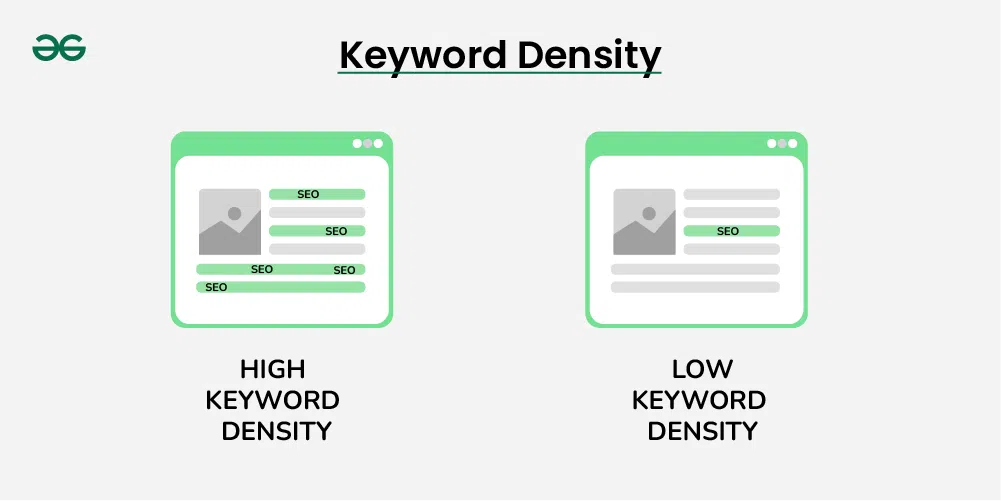
If you’re a business owner, marketer, or content creator trying to compete in today’s AI-powered search ecosystem, understanding keyword density is still part of the foundation. The difference is this: modern SEO is about meaning, not mechanical repetition.
Let’s break it down properly.
What Is Keyword Density?
Keyword density is the percentage of times a specific keyword appears on a webpage compared to the total number of words on that page.
For example:
- Article length: 1,000 words
- Keyword used: 10 times
- Keyword density = 1%
Simple math. Complex implications.
Why Keyword Density Is No Longer the Star of the Show
Search engines in 2026 don’t “count words.” They understand context.
Google’s AI systems (like RankBrain and Helpful Content systems), semantic search, natural language processing, and AI-generated search overviews mean that content is evaluated based on:
- Topical depth
- User intent alignment
- Authority and trust signals
- Semantic relationships
- Experience and originality
- Page performance and UX
So if you’re still obsessing over hitting a “2% keyword density,” you’re optimizing for 2012.
That said…
Why Keyword Density Still Matters (Strategically)
Keyword density today acts as a content alignment signal, not a ranking lever.
It helps ensure:
- Your page clearly communicates its main topic
- Search engines understand contextual relevance
- You avoid under-optimization
- You don’t accidentally drift off-topic
The goal is clarity — not repetition.
If your focus keyword appears naturally in:
- Title
- H1
- At least one H2
- Meta description
- Intro paragraph
- Image alt text
- URL (when appropriate)
…you’re already doing better than most competitors.
What’s a “Good” Keyword Density in 2026?
There is no official number. But in practice:
- 0.5%–1.5% works well for most articles.
- Over 2% may start feeling forced.
- Under 0.3% may signal unclear topical focus.
That’s the real optimization metric.
The Bigger Picture: Semantic SEO & AI Search
Modern SEO tools like:
- Ahrefs
- SEMrush
- Surfer SEO
- Frase
- Clearscope
- Google Search Console
- Google Analytics 4
…don’t just measure keyword repetition anymore. They analyze:
- Topic clusters
- Related queries
- Competitor coverage
- Search intent gaps
- Content comprehensiveness
- AI-generated SERP summaries
Today’s winning strategy? Topical authority, not keyword stuffing.
If you write about “keyword density,” search engines also expect related terms like:
- on-page SEO
- semantic search
- search intent
- ranking factors
- AI content
- content optimization
That’s how modern algorithms determine relevance.
How to Calculate Keyword Density (Step-by-Step)
- Count total words in your article.
- Count how many times your keyword appears.
- Apply the formula.
Or — skip the calculator and use tools like:
- Yoast SEO
- Rank Math
- Surfer SEO
- SEMrush On-Page SEO Checker
- Ahrefs Site Audit
These tools now combine keyword analysis with readability, NLP entities, and competitor benchmarks.
Because density alone isn’t enough anymore.
The Real Danger: Keyword Stuffing in the AI Era
Here’s something many businesses overlook:
AI-generated content has made search engines stricter.
If your content:
- Feels repetitive
- Lacks depth
- Is overly optimized
- Reads unnaturally
…it may get filtered out by helpful content systems.
Today, authenticity and expertise matter more than mechanical optimization.
Which is why at ONEWEBX, we optimize for humans first — and algorithms second.
Keyword Density vs. Search Intent
You can have perfect density and still fail.
Why?
Because you answered the wrong question.
Search engines prioritize intent:
- Informational
- Transactional
- Commercial investigation
- Navigational
If someone searches “keyword density calculator,” they don’t want a philosophy lesson.
If they search “what is keyword density,” they want clarity.
Density supports intent — it doesn’t replace it.
The ONEWEBX Approach to Modern SEO
We don’t build content around numbers.
We build it around:
- Data-driven keyword research
- User behavior insights
- AI-assisted content optimization
- UX-driven page structure
- Conversion-focused copywriting
- Accessibility and performance standards
SEO in 2026 is integrated. Technical performance, content strategy, AI tools, UX design, brand positioning — it all works together.
