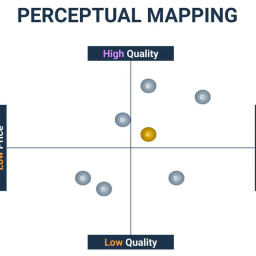

In today’s AI-powered digital landscape, your competitors are signals — showing you what’s resonating, what’s failing, and where opportunity still exists.
Ignoring them doesn’t make you original.
It makes you uninformed.
Competition Has Changed (And So Has the Playbook)
A decade ago, competitive research meant checking:
- Website layouts
- Keywords
- Pricing pages
Today? That barely scratches the surface.
Modern competition analysis looks at:
- Search intent and content depth
- UX patterns and friction points
- Performance metrics and accessibility compliance
- AI adoption (chatbots, personalization, automation)
- Brand voice and emotional resonance
- Trust signals and social proof
At ONEWEBX, we analyze how competitors convert — not just what they say.
AI Has Turned Competitive Analysis Into a Superpower
Here’s the good news: you don’t need a massive team to do this well anymore.
AI-driven tools now allow businesses to:
- Identify content gaps across entire industries
- Track SERP changes in real time
- Analyze UX behavior with heatmaps and session replays
- Benchmark site speed, accessibility, and Core Web Vitals
- Predict emerging trends before they peak
But tools don’t replace strategy.
Without expert interpretation, data is just noise.
That’s where experienced teams — like ONEWEBX — come in.
UX Benchmarking: Where Most Brands Miss the Mark
Your competitors are teaching your customers what to expect.
If their checkout is smoother…
If their navigation is clearer…
If their messaging is more human…
Guess who wins?
UX benchmarking isn’t about imitation — it’s about understanding user expectations and then exceeding them.
This includes:
- Mobile-first design audits
- Accessibility best practices (WCAG compliance isn’t optional anymore)
- Load speed and performance optimization
- Clarity of calls-to-action
- Emotional pacing and visual hierarchy
Design without context is guesswork.
Design informed by competition is precision.
Content Isn’t King Anymore — Relevance Is
Your competitors’ blogs aren’t just content.
They’re SEO experiments happening in public.
Analyzing them reveals:
- What topics Google actually rewards
- Where thin content dominates (opportunity!)
- How brands are structuring AI-friendly articles
- Which formats perform best (guides, FAQs, video, comparison pages)