
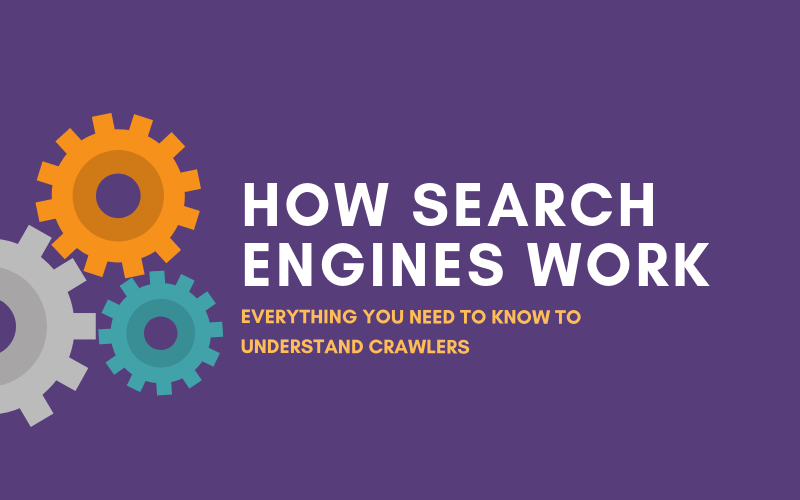
At ONEWEBX, we help businesses build websites that don’t just exist — they perform. To do that, you need to understand how search engines actually work today.
The Three Core Steps: Crawl, Index, Rank (Still True — But Smarter)
Search engines like Google and Bing still follow the classic three-step process:
- Crawling
- Indexing
- Ranking
But thanks to AI, machine learning, and evolving privacy standards, the game has changed.
1. Crawling: How Search Engines Discover Your Website
Search engines deploy bots (also called spiders or crawlers) that scan the web 24/7.
For example:
- Google uses Googlebot
- Bing uses Bingbot
These bots:
- Follow links from page to page
- Read HTML structure
- Analyze metadata
- Interpret structured data
- Evaluate internal linking
But here’s the modern twist:
Crawlers Now Render Pages Like Real Users
Thanks to advancements in rendering technology, search engines can now process:
- JavaScript-heavy websites
- Dynamic content
- Progressive web apps
- Structured data markup (Schema.org)
If your website loads slowly, hides content behind scripts, or blocks crawlers in your robots.txt file — you’re invisible.
And invisible websites don’t convert.
2. Indexing: Your Content Enters the AI Library
Once crawled, your content is analyzed and stored in a massive database called an index.
But modern indexing is no longer about matching keywords.
Search engines now use AI systems like:
- Google’s RankBrain
- Google’s BERT
- Multimodal AI systems that interpret images, video, and context
Search engines try to understand:
- User intent (informational? transactional?)
- Content quality
- Topical authority
- Context and semantics
- User engagement signals
So yes, keywords still matter.
But context matters more.
3. Ranking: The Algorithmic Judgment
When someone types a query, the search engine decides — in milliseconds — which results deserve the top spots.
Today’s ranking factors include:
Relevance & Intent Match
Does your content actually solve the user’s problem?
Experience, Expertise, Authority, Trust (E-E-A-T)
Google heavily emphasizes credibility. Who wrote it? Why should we trust it?
Page Experience
Core Web Vitals, mobile usability, accessibility, load speed.
Engagement Signals
Click-through rate, dwell time, bounce behavior.
Structured Data
Helps search engines understand your content faster.
SEO is no longer about tricking algorithms.
It’s about aligning with them.
The Role of AI in Modern Search
Search engines are increasingly powered by generative AI.
With AI-driven results and conversational search experiences (like Google’s Search Generative Experience and AI-powered summaries), your content must:
- Be structured clearly
- Provide direct answers
- Include FAQs
- Use semantic relevance
- Demonstrate authority
Search is shifting from “10 blue links” to AI-curated responses.
If your content isn’t optimized for AI interpretation, you risk disappearing from visibility.
The End of Alexa — What to Use Instead
If you remember using Alexa Internet to check website rankings — that tool officially shut down.
Today’s smarter alternatives include:
- SEMrush
- Ahrefs
- Moz
- Google Search Console
These platforms offer:
- Real-time keyword tracking
- Backlink analysis
- Competitor benchmarking
- Technical audits
- AI-driven content suggestions
Modern SEO tools don’t just measure performance — they guide strategy.
What This Means for Your Business Website
Here’s the hard truth:
If your website isn’t built with technical SEO, AI-optimized content, UX clarity, and mobile-first performance in mind — it’s underperforming.
Not because your business isn’t great.
But because search engines don’t fully understand it.
At ONEWEBX, we build websites that:
- Load fast
- Communicate clearly
- Follow structured SEO frameworks
- Use AI strategically (without sounding robotic)
- Convert traffic into leads
Because traffic without conversion is just expensive decoration.
The Future of Search (And Why You Should Care)
Search is becoming:
- More personalized
- More AI-driven
- More intent-focused
- More privacy-conscious (hello GDPR & data regulations)
- More multimodal (voice, image, video search)