
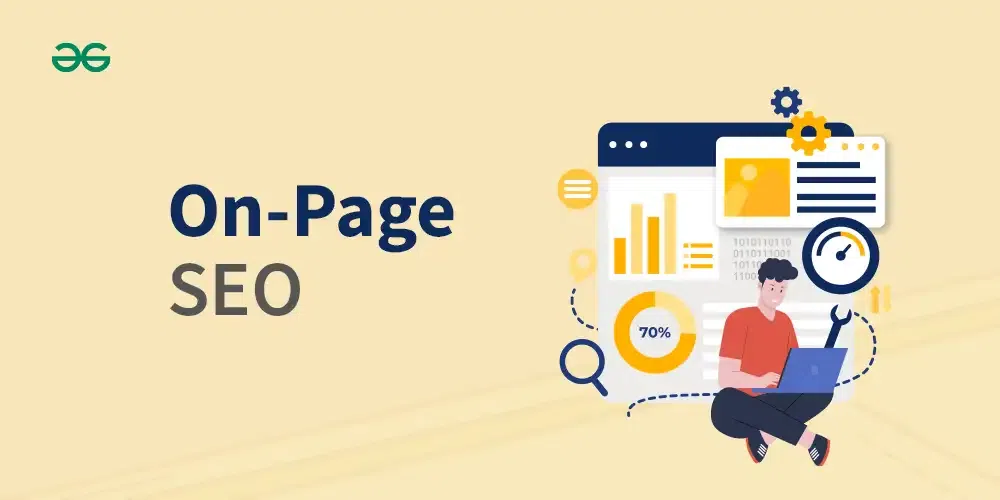
In today’s AI-powered search ecosystem, on-page optimization isn’t about tweaking keywords for Google bots—it’s about improving clarity, experience, accessibility, and intent for real humans (with AI helping decide who wins).
If your site already has content, you’re sitting on untapped potential. And fixing what’s already there is often faster, cheaper, and far more effective than starting from scratch.
What On-Page Optimization Really Means Today
On-page SEO used to be simple:
- Add keywords
- Tweak title tags
- Adjust meta descriptions
- Done
That era is over.
Modern on-page optimization now includes:
- Search intent alignment
- UX and behavioral signals
- Content depth and clarity
- Accessibility and inclusivity
- AI-readable structure
- Page experience and performance
- Trust, authority, and relevance
Search engines are smarter. Users are less patient. And AI systems are judging your content before humans ever see it.
Why Fixing Existing Content Is a Power Move
Older content already has:
- Indexing history
- Backlinks
- Brand trust signals
- Search visibility (even if weak)
Which means optimization compounds faster.
At ONEWEBX, we regularly see optimized legacy pages outperform brand-new posts within weeks—not months.
Because you’re not fighting from zero.
You’re refining what already works.
Step 1: Identify Content That’s Worth Fixing
Not all content deserves CPR.
Focus on pages that:
- Rank between positions 5–30
- Get impressions but low clicks
- Have traffic but poor conversions
- Cover evergreen topics
- Represent core services or expertise
Google Search Console is your best friend here—especially when paired with AI tools that surface intent gaps and UX issues.
Step 2: Re-Evaluate Search Intent (This Is Where Most Pages Fail)
The biggest reason content underperforms?
It no longer matches what users actually want.
Search intent shifts over time—especially with:
- AI-generated summaries
- Voice search
- Zero-click results
- Industry changes
Ask yourself:
- Is this page informational, commercial, or transactional?
- Does the headline promise what the content delivers?
- Is the content solving the problem quickly?
If intent is off, no amount of keywords will save the page.
Step 3: Optimize Content for Humans First (AI Second)
Here’s the irony:
The more you optimize for humans, the better AI understands your page.
Modern content optimization includes:
- Clear H1–H3 hierarchy
- Scannable sections (short paragraphs, bullets)
- Direct answers early in the content
- Updated examples and references
- Natural language—not keyword stuffing
AI tools (yes, including ChatGPT) can help:
- Rewrite outdated sections
- Improve clarity
- Expand thin content
- Identify missing subtopics
But strategy still requires a human brain.
Step 4: UX Is Now an SEO Ranking Factor (Unofficially, But Obviously)
If users bounce, scroll poorly, or hesitate—search engines notice.
On-page optimization must account for:
- Page speed and Core Web Vitals
- Mobile-first design
- Visual hierarchy
- CTA placement
- Accessibility (WCAG standards)
SEO and UX are no longer separate disciplines.
They’re roommates.
And when they don’t get along, conversions suffer.
Step 5: Optimize the “Invisible” Stuff That Still Matters
Yes—these still count:
- Title tags (clear, compelling, intent-driven)
- Meta descriptions (written for clicks, not bots)
- Image optimization + alt text (accessibility + AI vision)
- Internal linking (contextual, not random)
- Schema markup (especially FAQs and services)
These elements help AI systems understand your content—crucial in an era of AI-generated search summaries.
Step 6: Add Conversion Signals (SEO Without Conversions Is a Vanity Metric)
Traffic without action is just noise.
Optimized pages should:
- Guide users toward next steps
- Reinforce trust (social proof, credentials)
- Answer objections proactively
- Include relevant CTAs—not popups from 2012
At ONEWEBX, we treat on-page optimization as a revenue strategy, not a traffic tactic.
The AI Advantage: Smarter Optimization, Faster Wins
AI doesn’t replace SEO strategy—it accelerates it.
We use AI tools to:
- Detect content gaps
- Analyze SERP patterns
- Predict intent shifts
- Personalize on-page experiences
- Test messaging faster
But the winning edge comes from knowing what to optimize—and why.