

AI can generate blog posts in seconds. Social platforms reward speed over depth. And audiences? They’re more skeptical, distracted, and privacy-aware than ever before.
That’s exactly why true thought leaders matter in 2026.
They don’t just chase trends—they interpret them. They don’t flood feeds—they shape conversations. And most importantly, they help brands and creators navigate a digital landscape where trust, clarity, and originality are the real currency.
Here are 20 content marketing thought leaders worth following in 2026 if you want smarter strategies, better content, and a competitive edge.
The 20 Content Marketing Thought Leaders Defining 2026
1. Ann Handley
Still the gold standard for human-centered content. Ann’s work reminds us that clarity, empathy, and simplicity outperform cleverness—especially in an AI-saturated world.
2. Neil Patel
Love him or critique him, Neil remains a powerhouse in SEO and content distribution. His strength? Making complex growth tactics digestible for businesses of all sizes.
3. Rand Fishkin
A much-needed voice of transparency in marketing. Rand’s insights into search behavior, zero-click searches, and platform dependency are essential reading in 2026.
4. Joe Pulizzi
The godfather of content marketing continues to champion audience-first strategies, owned media, and long-term brand building over short-term hacks.
5. Ross Simmonds
A leading authority on content distribution. Ross focuses on where content lives and how it spreads—critical thinking in a fragmented platform economy.
6. Amanda Natividad
One of the sharpest voices on modern brand storytelling, audience growth, and content systems that actually scale.
7. Andy Crestodina
A master of data-backed content strategy. Andy bridges analytics, UX, and storytelling in a way that feels practical—not overwhelming.
8. Jay Acunzo
Jay challenges marketers to stop copying competitors and start developing original points of view. In 2026, differentiation is survival.
9. Katie Delahaye Paine
Measurement matters more than ever. Katie’s work helps marketers connect content to real business outcomes—not vanity metrics.
10. Brian Dean
Known for actionable SEO frameworks that evolve with search algorithms. His focus on intent, structure, and authority still holds strong.
11. Christopher Penn
A go-to voice on AI, analytics, and marketing ethics. Christopher helps marketers use AI responsibly and strategically—without losing human judgment.
12. Dave Gerhardt
B2B marketing with personality. Dave’s approach proves that even “serious” industries benefit from humor, honesty, and bold positioning.
13. Melanie Deziel
An expert in content ideation and creative formats. Perfect for marketers tired of publishing the same recycled blog posts.
14. Wil Reynolds
A leader in ethical SEO and data-driven storytelling. Wil’s work emphasizes collaboration between SEO, content, and UX teams.
15. Mari Smith
Still one of the strongest voices in social content strategy, especially as platforms continue to evolve toward pay-to-play ecosystems.
16. April Dunford
Positioning expert extraordinaire. April helps brands clearly articulate why they matter—a critical skill in crowded markets.
17. Peep Laja
Conversion-focused content meets UX psychology. Peep’s insights are invaluable for turning traffic into revenue.
18. Lily Ray
A leading authority on E-E-A-T, trust signals, and SEO in regulated or high-stakes industries—especially relevant post-AI search updates.
19. Mark Schaefer
Known for deep thinking on digital disruption, community, and the human side of marketing. His work feels more relevant every year.
20. The ONEWEBX Perspective (Yes, Really)
Thought leadership isn’t just about influence—it’s about implementation. At ONEWEBX, we live at the intersection of content, UX, automation, and strategy, helping businesses turn ideas into digital ecosystems that convert.
Sometimes the most valuable thought leaders are the ones building quietly behind the scenes.
What These Thought Leaders All Have in Common
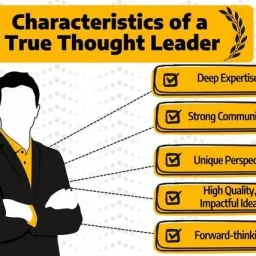
Despite different styles and specialties, they share a few critical traits:
They prioritize audience trust over algorithms
They adapt to AI without surrendering originality
They understand UX, accessibility, and clarity matter
They think in systems—not one-off posts
They teach, challenge, and inspire action
These are the same principles we apply when helping businesses future-proof their websites and content strategies.