

At ONEWEBX, we approach keyword research as a strategic business intelligence exercise, not a checklist item.
Let’s break it down.
Why Keyword Research Still Matters (Even in the AI Era)
With AI-powered search experiences like Google Search AI Overviews, users are getting summarized answers directly in search results.
So does keyword research still matter?
Absolutely.
Because:
- AI models pull from high-quality, relevant, well-structured content.
- Semantic authority determines visibility.
- Search intent still drives discovery.
- Businesses still need qualified traffic—not just impressions.
Keyword research is now about topic ecosystems, not isolated terms.
Step 1: Define Your Business Goals First
Before opening any SEO tool, ask:
- Are we trying to generate leads?
- Drive ecommerce sales?
- Build authority?
- Capture local traffic?
- Educate prospects?
If your keyword strategy isn’t tied to business objectives, it becomes noise.
At ONEWEBX, we map keywords directly to the buyer journey:
- Awareness
- Consideration
- Decision
- Retention
Because ranking for traffic that doesn’t convert is just expensive vanity.
Step 2: Understand Search Intent (The Real Game-Changer)
Modern keyword research revolves around intent.
There are four core types:
- Informational – “How does website speed affect SEO?”
- Navigational – “ONEWEBX web design services”
- Commercial – “Best web design agency for small business”
- Transactional – “Hire web marketing agency today”
AI search engines prioritize intent satisfaction.
If your content doesn’t clearly match intent, you won’t rank—even if you use the right keywords.
Tools like:
- Semrush
- Ahrefs
- Google Search Console
- Surfer SEO
…now provide intent classification and SERP analysis features to help refine targeting.
Step 3: Brainstorm Core Topic Pillars
Instead of chasing random keywords, build around core pillars.
For example, if you’re a web agency:
- Website Design
- SEO Strategy
- PPC Advertising
- Conversion Optimization
- AI Automation
- Website Speed
- UX/UI Strategy
Each pillar then branches into clusters.
This topic-cluster model aligns with how search engines understand semantic relationships.
Google doesn’t rank pages. It ranks authority.
Step 4: Use Modern SEO Tools (Goodbye Alexa)
Alexa has been discontinued, and frankly, today’s tools are far more powerful.
Use:
- Semrush – Competitive research & keyword gap analysis
- Ahrefs – Backlink insights & SERP tracking
- Google Keyword Planner – Paid & organic keyword data
- Ubersuggest – Beginner-friendly keyword discovery
- AnswerThePublic – Question-based search queries
- Google Trends – Seasonal & trending topics
AI features inside these platforms now:
- Cluster related terms
- Predict ranking difficulty
- Suggest content outlines
- Identify SERP feature opportunities
Keyword research has moved from manual spreadsheets to AI-assisted strategic modeling.
Step 5: Focus on Long-Tail & Conversational Queries
Short-tail keywords are competitive and often vague.
Long-tail keywords:
- Have clearer intent
- Convert better
- Face lower competition
- Align with voice search behavior
Example:
“Website design”
vs.
“Affordable website design for small law firms in New York”
Guess which converts?
With the rise of conversational AI search, natural-language queries matter more than ever.
Write how people speak.
Step 6: Analyze the SERP (Search Engine Results Page)
Before targeting any keyword, analyze:
- Who is ranking?
- Are results blog-heavy or service pages?
- Are AI summaries appearing?
- Is there a featured snippet?
- Are videos ranking?
If Google shows mostly informational content, don’t try to rank a sales page.
The SERP tells you what users expect.
Listen to it.
Step 7: Evaluate Keyword Metrics Strategically
Metrics to evaluate:
- Search volume
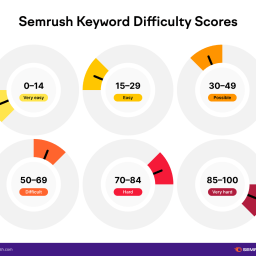
- Keyword difficulty
- Cost per click (CPC)
- Click-through potential
- SERP features
- Trend stability
High volume doesn’t always equal opportunity.
Sometimes a 200-search-per-month keyword with strong commercial intent is far more valuable than a 10,000-search vanity term.
At ONEWEBX, we prioritize conversion probability over raw volume.
Step 8: Organize Keywords into Content Clusters
Once you gather keywords, group them by:
- Topic relevance
- Intent
- Funnel stage
- Content type (blog, service page, landing page, guide)
Create:
- Pillar pages (comprehensive authority pieces)
- Supporting blog posts
- FAQ sections
- Case studies
- Resource hubs
This builds semantic depth and topical authority.
Search engines reward depth.
Step 9: Integrate AI—But Don’t Abdicate Strategy
AI tools like ChatGPT, Jasper, and Surfer can help:
- Generate keyword variations
- Draft content outlines
- Suggest semantic terms
- Identify optimization gaps
But here’s the truth:
AI amplifies strategy.
It does not replace it.
Without clear positioning, brand voice, and conversion goals, AI-generated content becomes generic.
At ONEWEBX, we combine AI efficiency with human insight—because performance requires both.
Step 10: Track, Measure, Refine
Keyword research isn’t a one-time task.
Monitor:
- Rankings
- Organic traffic
- Conversion rates
- Engagement metrics
- Click-through rates
- AI visibility impact
Use Google Analytics and Google Search Console to measure real performance—not assumptions.
SEO is iterative.
The market changes. Algorithms change. User behavior changes.
Your strategy must evolve too.
The Biggest Keyword Research Mistakes in 2026
- Targeting only high-volume keywords
- Ignoring intent
- Overusing AI without strategy
- Neglecting technical SEO
- Failing to connect keywords to conversions
- Creating content without authority structure
Ranking without converting is wasted effort.
How ONEWEBX Approaches Keyword Research
We don’t just find keywords.
We build strategic content ecosystems that:
- Align with business goals
- Reflect buyer psychology
- Leverage AI intelligently
- Strengthen brand authority
- Convert organic traffic into measurable growth
Keyword research isn’t just about traffic.