

Let’s explore what keyword research truly looks like today — and how your business can thrive in this game‑changing era.
1. Keyword Research Isn’t Dead — It’s Evolving
Traditional SEO keyword research used to mean two things:
- Find the most searched phrases.
- Stuff them into a page, meta tags, and hope for rankings.
Today? It’s an entirely different ball game.
AI‑driven search and conversational interfaces (think Google’s SGE, Perplexity, and chatbot integrations) are reshaping how users discover information online. Simply ranking for high‑volume keywords isn’t enough — you must understand intent, context, and relevance across platforms and user behaviours.
This means:
- Capturing long‑tail and natural language queries (the questions people actually ask).
- Optimizing for both traditional search and AI answer engines.
- Recognizing that search isn’t just text anymore — it’s voice, video, and multimodal.
2. AI Tools Are Your New Keyword Research Allies
AI is no longer optional — it’s core to every keyword strategy that scales.
Here’s what today’s best AI‑powered platforms help you do:
Semantic Understanding
Instead of obsessing over exact matches, modern tools analyze topics, related concepts, and user intent so you capture broader relevance.
Predictive Trends & Forecasting
AI analyzes patterns and signals to predict what topics will surge next — giving you a first‑mover advantage.
Content Suggestions & Clustering
Rather than isolated keywords, AI clusters related search phrases into themes — ideal for building content pillars and internal linking.
Voice & Conversational Insights
As more users speak to devices and AI assistants, long‑tail question formats are becoming more valuable than ever.
3. Top Keyword Research Tools to Consider in 2026
Here’s a snapshot of tools leading the pack — from robust enterprise platforms to nimble, niche creators:
Semrush (AI‑Enhanced SEO)
A full‑stack SEO suite with AI‑driven keyword discovery, topic clustering, and competitive insights. Perfect for both organic and paid strategy.
Ahrefs (AI Predictions + Trend Metrics)
Known for backlink data, now with AI trends and keyword intent insights.
ChatGPT + Browsing Plug‑Ins
Not just for content drafting — AI tools can ideate keywords, analyse intent, and simulate queries your audience would ask.
Specialized Tools (e.g., Keyword Tool Dominator, VidIQ)
Platforms that draw live autocomplete data from YouTube, Amazon, and ecommerce spaces bring real user behaviour into your strategy.
Emerging Tools (Gracker AI, Writesonic GEO)
These tools mine first‑party data and optimize content for generative answer engine visibility — beyond classic search rankings.
4. The New Frontier: Answer Engine Optimization (AEO)
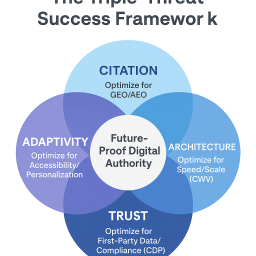
Here’s the twist: as AI engines become the new first stop for many searches, your visibility depends less on keywords per se and more on structured, conversational answers.
That’s where Answer Engine Optimization (AEO) comes in — a strategy that focuses on optimizing your content so AI systems will cite you as the best answer to users’ questions.
In practical terms, this means:
- Formatting answers clearly.
- Using conversational phrasing.
- Structuring content with concise answers to real user queries.
Suddenly, depth and clarity matter more than stuffing exact keyword phrases.